A practical, step-by-step predictive maintenance roadmap to reduce unplanned downtime in process plants and protect throughput, safety and margins.

In process industries, a single unplanned shutdown can cost six or seven figures per day in lost throughput, off-spec product and emergency labor. Worse, reactive failures cascade: a tripped pump can force a column upset, trigger a flare event and put your ESG numbers at risk.
Predictive maintenance (PdM) flips the model. Instead of waiting for failure or over-servicing healthy assets, you act on early warning signals and intervene during planned windows. The result is fewer surprises, longer asset life and lower total cost of ownership.
This roadmap shows how to get there pragmatically — without boiling the ocean.

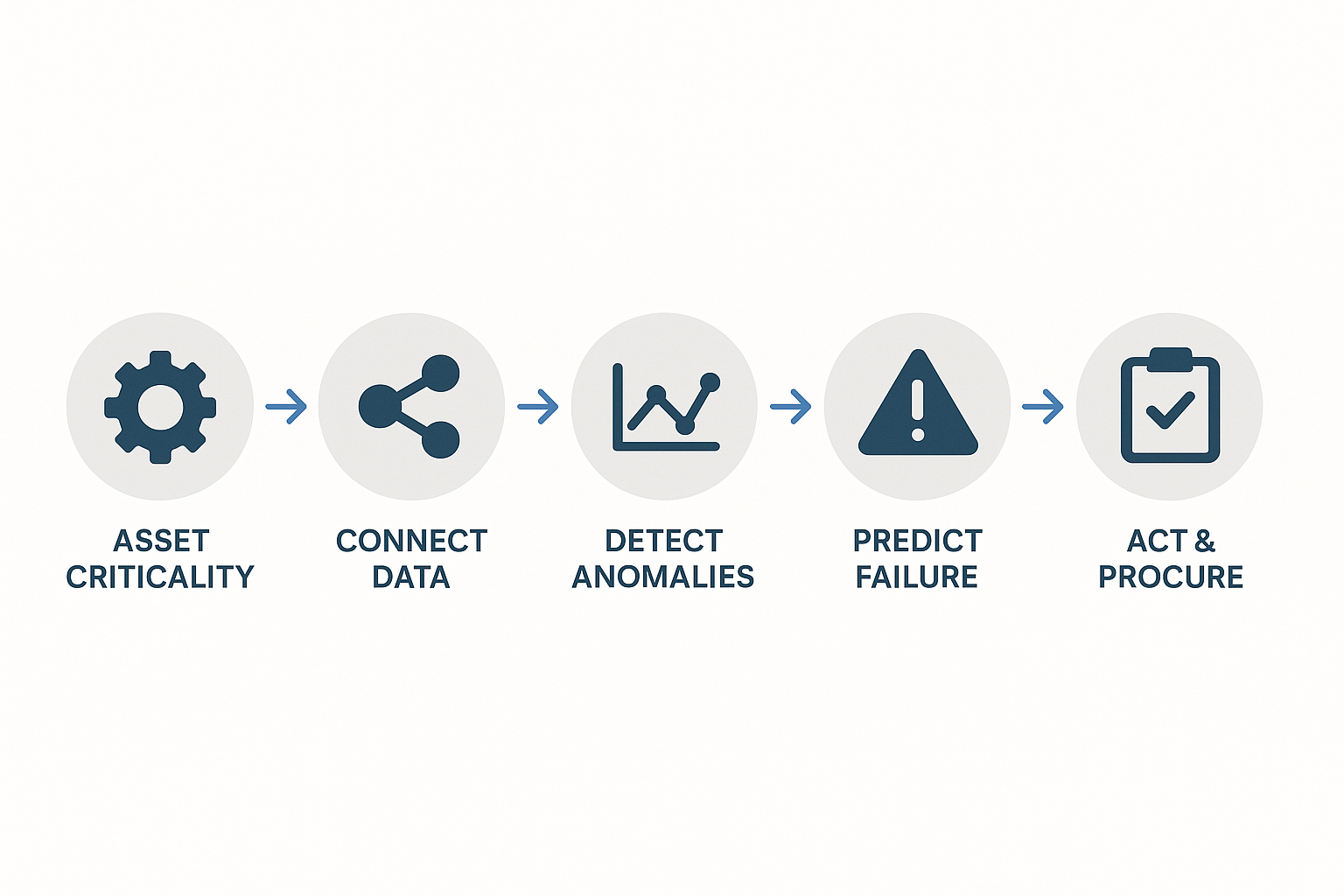
Not every motor deserves a sensor. Start by scoring assets on consequence of failure (safety, environment, production) and probability of failure.
Focus your first PdM deployment on Tier 1. A handful of well-chosen assets often drives the majority of downtime risk.
Most plants are data-rich and insight-poor. Before buying new hardware, harvest existing signals from the historian, DCS/SCADA, CMMS work orders and lab data. Then close gaps with targeted sensors — vibration, temperature, pressure, acoustic and current signatures.
The goal is a single, contextualized view of each asset. PlantPilot builds a Digital Twin directly from your documentation — P&IDs, datasheets and maintenance history — so signals are tied to the right equipment and failure modes from day one.
PdM maturity grows in stages:
You don’t need step four on day one. Even reliable anomaly detection on Tier 1 assets buys precious lead time — turning a 3 a.m. emergency into a scheduled task.

A prediction is only valuable if it changes what your team does. Wire alerts into your maintenance workflow so each one becomes a prioritized, scheduled work order with the right procedure, permits and parts.
This is where many programs stall: the failing bearing is identified, but the spare is six weeks out. PlantPilot links predictions to 1-click spare-part procurement — generating an RFQ for the exact part from the Digital Twin’s bill of materials — so lead time never becomes the new bottleneck.
Align interventions with planned outages and your next Turnaround to minimize disruption.
Track a tight set of metrics so the program proves itself:
Every confirmed prediction — and every miss — sharpens the models. Once Tier 1 delivers, expand to Tier 2 and adjacent units.
Degrading equipment usually wastes energy before it fails: fouled exchangers, worn seals, throttled pumps. The same monitoring that prevents downtime surfaces efficiency losses. PlantPilot’s energy & CO₂ analytics convert those insights into savings and feed cleaner data into your ESG and CSRD reporting — one dataset, several payoffs.
Start narrow, prove value fast, then scale with confidence.
Reducing unplanned downtime isn’t about more sensors — it’s about turning the right signals into the right action at the right time. Rank by criticality, connect your data, detect and predict, then close the loop with planned work and ready spares. Done well, predictive maintenance protects throughput, safety and margins at once — and PlantPilot gives you a single platform to make that roadmap real.
Get a demo and an individual version of PlantPilot to run your plant operation — saving money, time and emissions. Whether you build plants or operate them: establish a future-ready service business at a fingertip and run your plant smarter.
Get in contact

 Deutsch (DE)