How a digital twin built from your P&IDs turns predictive-maintenance signals into approved spare-part purchase orders — cutting downtime and admin overhead.

Maintenance in process plants runs on a paradox. The data needed to act fast is everywhere — in P&IDs, datasheets, historians, the CMMS/ERP and the heads of senior technicians — yet it is so fragmented that a single bearing failure can trigger days of phone calls, spreadsheet hunting and manual purchase orders. “From P&ID to purchase order in one click” is about collapsing a multi-system, multi-department workflow into a single, traceable chain of decisions — turning a procurement loop that often runs for days into one that resolves in minutes.
This article walks through how that chain works, where the value sits, and what trade-offs you accept along the way.
Unplanned downtime is the headline cost. Deloitte has estimated that unplanned downtime costs industrial manufacturers in the order of $50 billion a year, with maintenance inefficiency eroding a meaningful share of productive capacity (Deloitte). Most of that loss is not the broken part — it is the time between failure and resolution.
That lag is structural. The technician knows the pump is failing; finding the right spare means cross-referencing the P&ID tag, the equipment datasheet, the manufacturer part number and the ERP material master — four documents in four systems. The U.S. Department of Energy notes that a functional predictive-maintenance program can deliver roughly 8–12% savings over preventive maintenance and materially reduce unexpected breakdowns (U.S. DOE). Detection is the easy half; procurement is where the clock keeps running.

The foundation is a structured, queryable model of the plant. PlantPilot builds this digital twin directly from existing documentation — P&IDs, equipment lists, datasheets — so the relationships between a tag, its asset, its spare parts and its maintenance history become machine-readable rather than buried in PDFs.
This matters because asset-management standards already assume such structure. ISO 55000 frames asset management around aligning maintenance decisions with business value and lifecycle cost — which is impossible if your asset register is a folder of scanned drawings. A digital twin turns the P&ID from a static reference into the navigational spine of every later decision. See how this works for engineering teams.
The trade-off is honest: extraction from legacy documentation is never 100% clean on day one. Symbols vary, revisions conflict, and tag conventions drift across decades. The realistic approach is iterative — automated extraction plus human validation on the assets that matter most, prioritised by criticality.
A static twin tells you what should be there. Live data tells you what is actually happening. Through open interfaces such as OPC UA and connectors to historians like AVEVA PI (formerly OSIsoft PI), the twin ingests vibration, temperature, pressure and flow trends.
The market signal is clear: McKinsey has estimated that predictive maintenance can reduce equipment downtime by up to 30–50% and cut maintenance costs significantly versus reactive approaches, with condition monitoring a core source of the broader industrial-IoT value at stake (McKinsey). Treat these as upper-bound potential, not a guaranteed result.
This is also where safety standards intersect. In plants governed by IEC 61511 (functional safety for the process industry), maintenance of safety-instrumented systems is not optional housekeeping — it is a compliance obligation with documented proof-test intervals. A twin that links a sensor anomaly to the relevant safety function makes that traceability routine rather than audit-day panic.
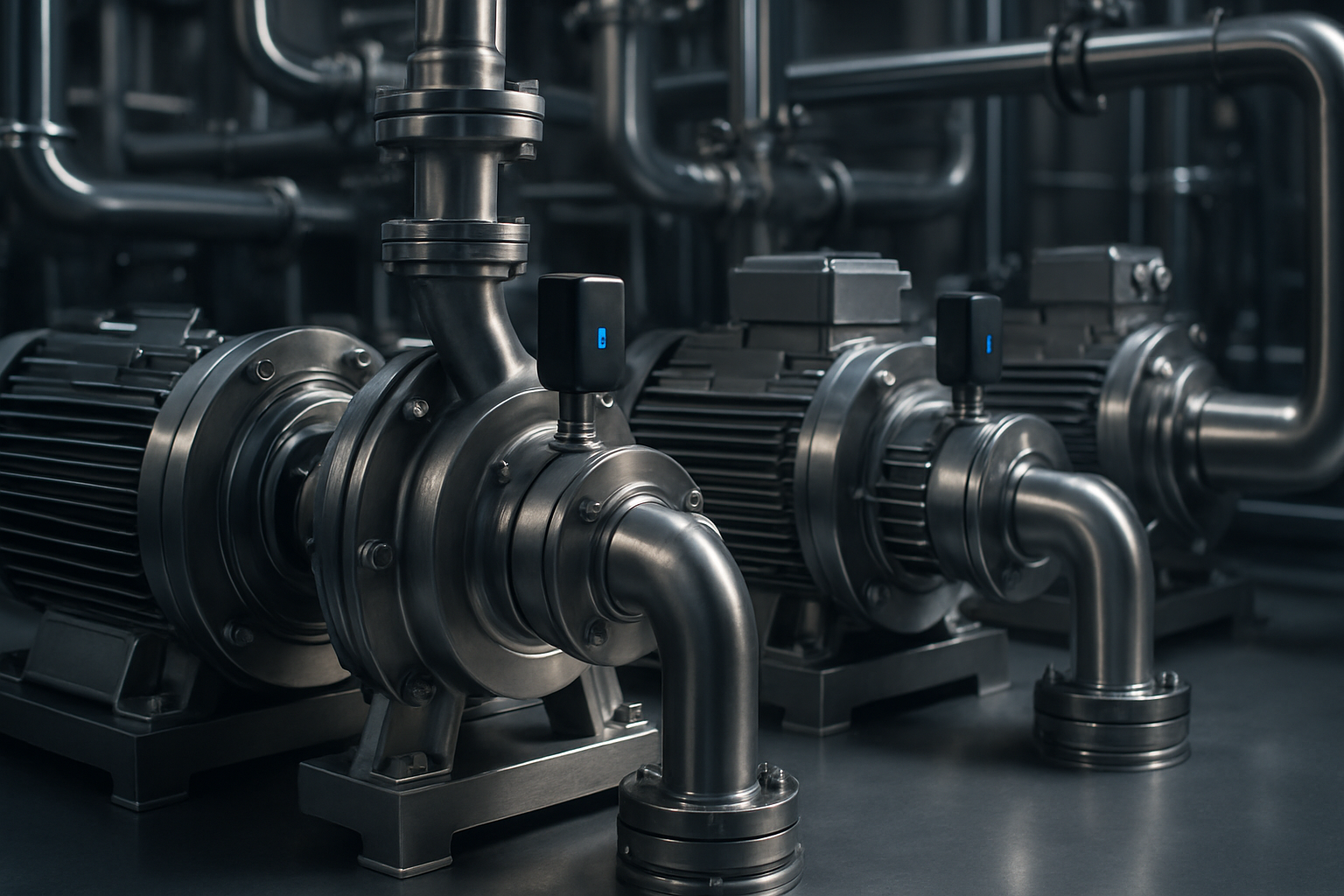
This is where “one click” becomes real. When the analytics layer flags a degrading bearing, the workflow chains automatically:
The technician is not retyping part numbers across systems; they are reviewing and approving a decision the system has already assembled. That is the difference between automation and mere digitisation. PlantPilot’s 1-click spare-part procurement is built to close this last, expensive gap.
The payoff compounds during a turnaround, where discovery work — finding out what you actually need once equipment is opened — is a frequent driver of schedule and budget overruns. A twin that already maps tags to parts and lead times shortens that discovery loop.
There is a second dividend owners increasingly cannot ignore. Every maintenance decision is also an energy and emissions decision. Motor-driven systems are enormous energy consumers — the IEA estimates that electric motor systems account for roughly 45% of global electricity consumption (IEA). A degrading pump does not just risk failure; it can quietly burn excess energy for weeks before it breaks.
Because the same twin captures asset condition and energy data, it becomes a natural source for ESG and CSRD reporting. Under the EU’s Corporate Sustainability Reporting Directive (CSRD), in-scope companies must report standardised, assured sustainability data (European Commission). Aligning that reporting with the GHG Protocol is far easier when energy and asset data already live in one structured model rather than being reconstructed manually each quarter.
No serious operator should expect magic. The honest trade-offs:
What you gain is a workflow where the time from signal to spare on the way drops from days to minutes, where every action is traceable for ISO 55000 and IEC 61511 audits, and where the same data feeds your energy and CSRD numbers.
“From P&ID to purchase order in one click” means removing the manual seams between detection, decision and procurement. The building blocks — digital twins, OPC UA connectivity, predictive analytics — are mature. The differentiator is wiring them into a single chain so a vibration spike on a pump becomes an approved requisition without anyone opening four systems. For plant owners and EPCs, that is lower TCO, cleaner audits and less wasted energy. Start with your most critical assets, prove the chain, then scale.
Get a demo and an individual version of PlantPilot to run your plant operation — saving money, time and emissions. Whether you build plants or operate them: establish a future-ready service business at a fingertip and run your plant smarter.
Get in contact

 Deutsch (DE)